
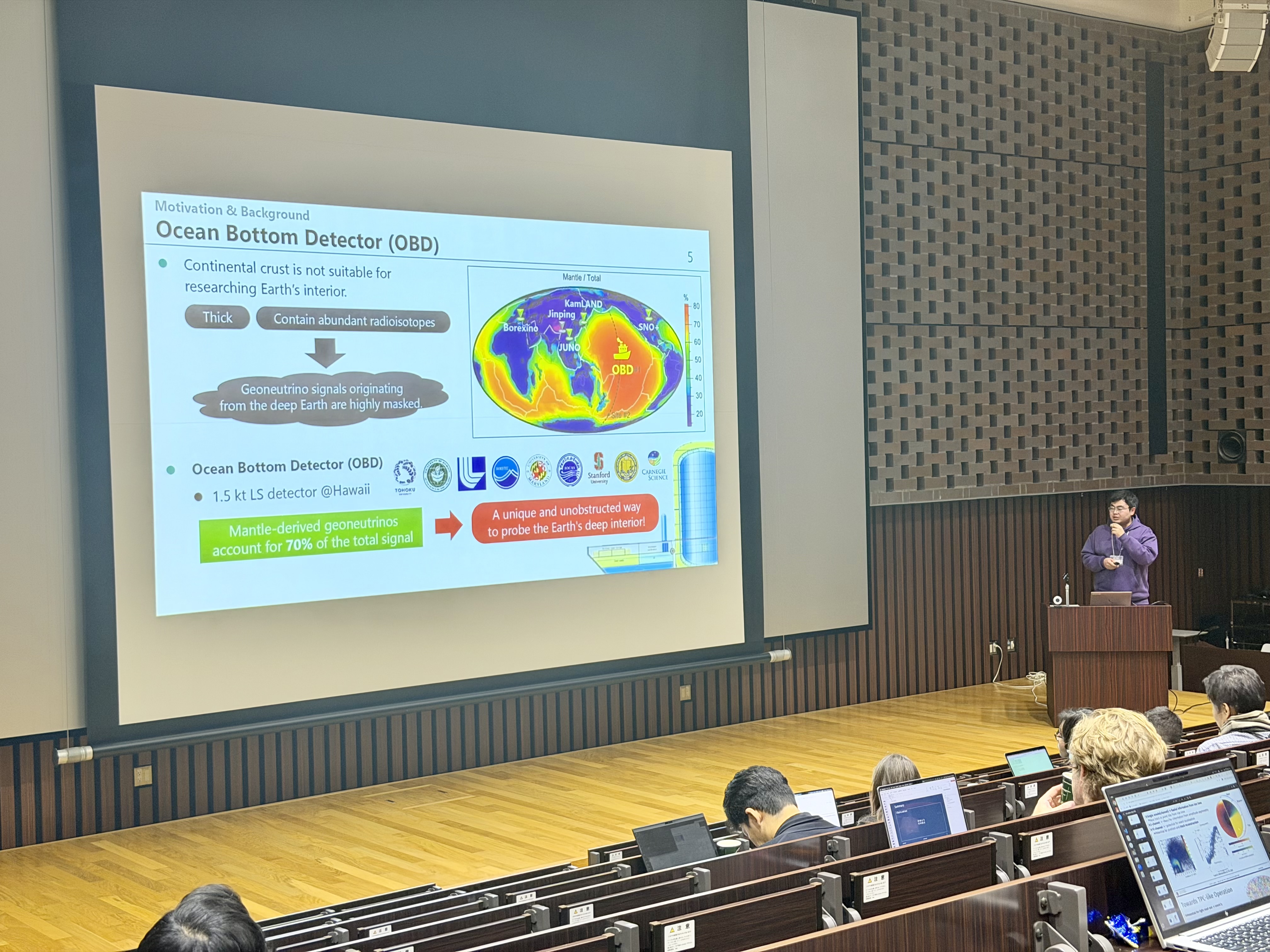
(Title Image: Giving my oral presentation on the OBD project and directional geoneutrino detection. Photo by Difan Yi.)
I just returned from the CYGNUS Workshop 2026 at Kobe University. The beautiful ocean view and the great local seafood made my stay in Kobe very pleasant, and it was a wonderful experience sharing my research with the community.
I gave a talk titled “Towards probing geochemical heterogeneities via directional geoneutrino detection.” While my current work mainly focuses on the Inverse Beta Decay (IBD) reaction, the discussions at the workshop really highlighted the potential of using recoil electrons for geoneutrino detection.
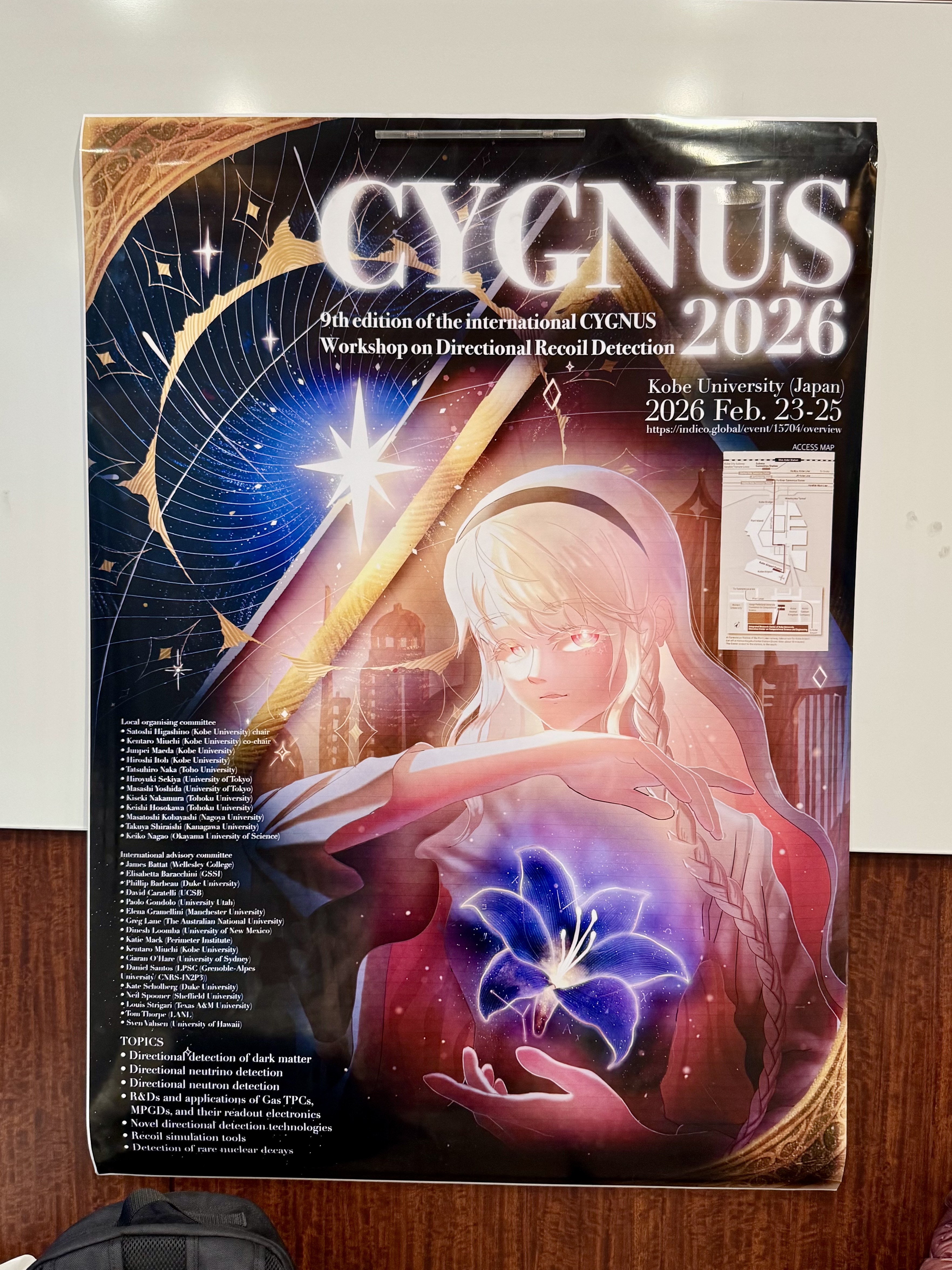
This approach is very promising because it provides intrinsic angular resolution through explicit directional correlation. More importantly, unlike IBD which has a 1.8 MeV energy threshold, recoil electrons have no theoretical threshold. This opens the door for the first-ever detection of K-40 geoneutrinos. As pointed out by Leyton et al. (2017) and Wang & Chen (2020), using high-pressure TPCs or slow liquid scintillators to track recoil electrons could be the key to extracting mantle and K-40 signals.
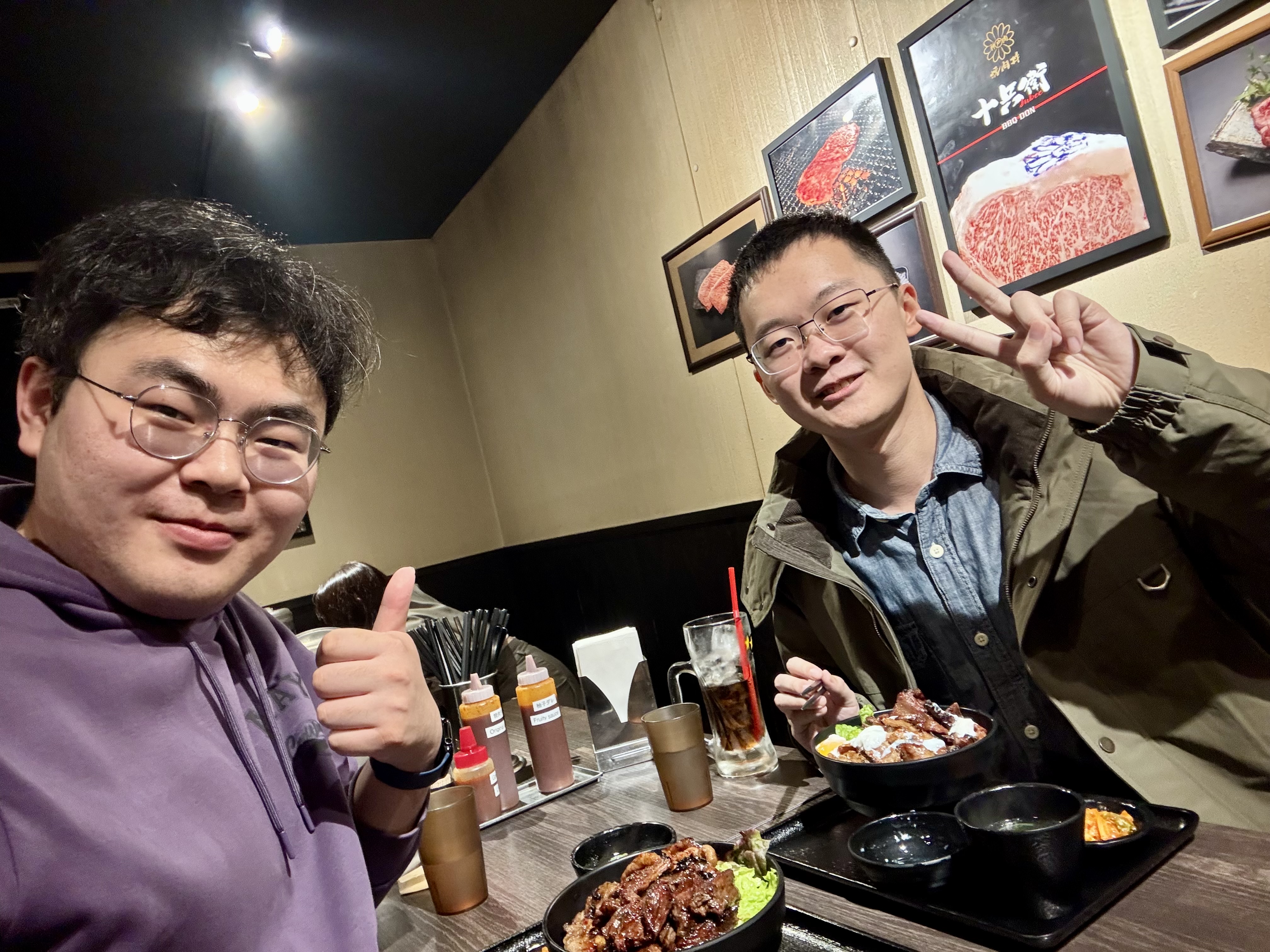
Another highlight of the trip was meeting Difan Yi, the first author of the Nature paper on the direct observation of the Migdal effect published this January (Yi et al, 2026). It was an honor to talk with someone whose work is literally changing our textbooks. Hearing about his journey from theory to direct observation was incredibly motivating. It reminds me why we spend so many hours in the lab because we all want to eventually uncover the hidden secrets of our universe.
The workshop was a great reminder of how exciting this field is. I am heading back to the lab with many new ideas and a lot of motivation!